Saltwater vs Freshwater Fish: Key Differences
What makes a saltwater fish different from a freshwater fish? The answer goes far deeper than just where they live — there are profound biological, physical, and behavioral differences that affect everything from their physiology to their flavor. Here's the complete breakdown.
The Fundamental Difference: Osmoregulation
The biggest difference between saltwater and freshwater fish is invisible to the eye: it's how they manage the balance of salt and water in their bodies — a process called osmoregulation.
🏞️ Freshwater Fish
Water constantly flows into freshwater fish (by osmosis) because their body fluids are saltier than the surrounding water. They must constantly pump out water through urine and actively retain salt through their gills. They produce large amounts of very dilute urine.
🌊 Saltwater Fish
The opposite problem: water is constantly drawn OUT of saltwater fish, and salt floods IN. They must drink large amounts of seawater, excrete salt through specialized gill cells, and produce very concentrated urine in tiny amounts. They are constantly at risk of dehydration.
This fundamental difference is why you cannot simply place a freshwater fish in saltwater (or vice versa) — most will die quickly. Their entire physiology is built around their home environment.

Fish That Live in Both: Diadromous Fish
Some remarkable fish species are able to make the transition between salt and fresh water — a remarkable physiological feat. These are called diadromous fish:
- ▸Anadromous: Born in freshwater, migrate to the ocean to grow, then return to freshwater to spawn. Chinook salmon, Atlantic salmon, steelhead, and striped bass are the most famous examples.
- ▸Catadromous: Born in the ocean, live most of their life in freshwater, and return to the ocean to spawn. American and European eels are the classic examples — they swim from freshwater rivers all the way to the Sargasso Sea to spawn.
- ▸Euryhaline: Can tolerate a wide range of salinity. Snook and bull sharks are examples — found in both saltwater and freshwater without completing a migration.
Visual Differences: How to Tell Them Apart
Body Color & Markings
Freshwater Fish Tend To:
- • Greenish, brownish, or golden tones that blend with vegetation and muddy bottoms
- • Vertical bars or horizontal stripes aligned with their habitat
- • Bright spawning colors during breeding season
- • Spots and mottling that match riverbeds
Saltwater Fish Tend To:
- • Silver, blue, or green countershading (dark on top, light below)
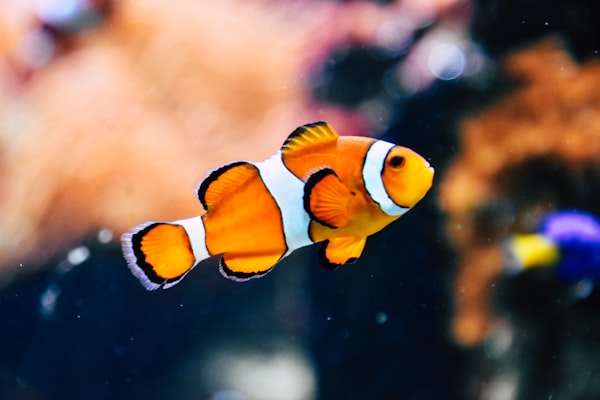
- • Vivid tropical colors in reef fish
- • Iridescent blues and greens visible from below (sky-like)
- • Less patterning in open-ocean pelagic species
Body Size & Shape
Saltwater environments are generally richer in food than most freshwater habitats, and the ocean is vast — this allows marine species to grow much larger. The world's largest fish (whale sharks, bluefin tuna, giant ocean sunfish) are all marine species.
Freshwater fish are generally smaller due to more limited food resources and smaller habitats, though some species like muskellunge, lake sturgeon, and Nile perch can reach impressive sizes.
Scale Differences
Many saltwater fish, especially reef species, tend to have smaller, more numerous scales than their freshwater counterparts. Some saltwater fish like tuna have scales only in select areas (corselet). Freshwater fish vary widely — from heavily scaled carp to scaleless catfish.
Behavioral Differences
Many open-ocean saltwater fish school in massive numbers (herring, anchovies, tuna) as a predator defense strategy. While freshwater fish do school (yellow perch, white bass), the formations are generally smaller. The scale of ocean schooling is simply impossible in freshwater — schools of billions of herrings can extend for miles.
Open-ocean saltwater fish often feed while constantly swimming (tuna never stop). Freshwater fish tend to be more territorial and associated with structure — using ambush tactics from vegetation, logs, or rocks. Bottom-feeding is more common in freshwater, where sediment-dwelling invertebrates are abundant.
Saltwater fish can migrate across entire ocean basins — bluefin tuna cross the Atlantic in 60 days, bluefin marlin circle the Pacific. Freshwater fish are limited by river systems. The most dramatic freshwater migrations are by anadromous salmon, which travel from the ocean into mountain streams hundreds of miles inland.
Many freshwater fish guard their nests actively (bass, sunfish, salmon). Most saltwater fish broadcast enormous numbers of eggs into the water column with no parental care — relying on sheer numbers for survival. Exceptions include some reef fish like clownfish and seahorses that are devoted parents.
Taste & Culinary Differences
One practical difference most people notice: saltwater fish generally have a stronger, "fishier" flavor than freshwater fish. Here's why:
- TMAO (trimethylamine oxide): Marine fish use this compound to counteract osmotic pressure from salt water. When fish dies, TMAO converts to TMA, the source of the "fishy" smell. Freshwater fish contain little to no TMAO.
- Fat content: Many pelagic saltwater fish (salmon, tuna, mackerel) are higher in omega-3 fatty acids from their oil-rich prey.
- Texture: Open-ocean fish that swim constantly (tuna, wahoo) have firmer flesh than sedentary freshwater species.
- Taste profile: Freshwater fish like walleye and crappie are considered mild and sweet; saltwater fish range from mild (halibut, flounder) to rich and bold (mackerel, bluefish).
Quick Reference: Saltwater vs Freshwater
| Feature | 🏞️ Freshwater | 🌊 Saltwater |
|---|---|---|
| Water osmosis direction | Water flows IN (fish must expel) | Water flows OUT (fish must drink) |
| Average size | Generally smaller | Often much larger |
| Typical coloring | Greens, browns, golds | Silver, blue-green, vivid reef colors |
| Schooling | Less common, smaller schools | Very common, can be enormous |
| Flavor | Mild and sweet | More pronounced, "fishy" |
| Migration | River/lake-limited | Can cross entire ocean basins |
| Examples | Bass, trout, walleye, pike | Tuna, snapper, grouper, halibut |
Identifying Salt vs. Fresh Species in the Field
If you're trying to identify an unknown fish and need to figure out if it's a saltwater or freshwater species, use these clues:
- 1. Location: The most obvious clue. What body of water did you find it in?
- 2. Lateral line: Saltwater fish often have more elaborate lateral line systems for detecting ocean vibrations.
- 3. Gill structure: Marine fish gills are more specialized for salt excretion but look similar externally.
- 4. Use the Fish Identifier app: The AI can distinguish saltwater vs. freshwater species from a photo instantly.
Not sure if it's saltwater or freshwater?
The Fish Identifier app can identify any fish from a photo — saltwater, freshwater, or anything in between.
📱 Download Fish Identifier — FreeAlso read: How to Identify Fish: A Beginner's Guide and Most Common Freshwater Fish in North America.